Azure Cosmos DB
About
Enables natural language interaction with Azure Cosmos DB for querying, creating, and managing databases, containers, and items through Go-based tools supporting both key authentication and managed identities.
Details
- Repository
- abhirockzz/mcp_cosmosdb_go
Explore
- List, create, and manage databases and containers.
- Add and read items in containers.
- Execute SQL queries with optional partition key scoping.
- Batch-create items using transactional batch operations.
- Supports Streamable HTTP and stdio transports.
- Can run locally or be deployed to a remote endpoint.

Setting up with Highlight
This MCP is not yet compatible with Highlight’s one-click setup. However, you can still use it with Highlight by following these steps:
- Download and install Highlight from highlightai.com/download
- Navigate to the plugins tab and select "Add Custom Plugin"
-
Configure the plugin with the settings below
Plugin Name
Azure Cosmos DBCommand (node, npx, python, etc.)./mcp_azure_cosmosdb_goEnvironment-
COSMOSDB_MCP_SERVER_MODE
http
Please refer to the README for specific instructions on how to obtain API keys or other required environment variables.
-
COSMOSDB_MCP_SERVER_MODE
- Enable "Start Automatically" if you want the plugin to start when Highlight launches





From the repository
Clone the repository, build the binary with go build, then run in HTTP or stdio mode. Authentication uses Azure’s DefaultAzureCredential (except for the local emulator, which uses key-based auth). Configure the server in your MCP client via a mcp.json file, setting either an HTTP URL or a stdio command.
List Databases
Retrieve a list of all databases in a Cosmos DB account.
Create Database
Create a new database in the Cosmos DB account.
List Containers
Retrieve a list of all containers in a specific database.
Read Container Metadata
Fetch metadata or configuration details of a specific container.
Create Container
Create a new container in a specified database with a defined partition key.
Add Item to Container
Add a new item to a specified container in a database.
Read Item
Read a specific item from a container using its ID and partition key.
Execute Query
Execute a SQL query on a Cosmos DB container with optional partition key scoping.
Batch Create Items
Add multiple items to a container using Transactional Batch operation.
Claude Desktop / Cursor
Paste into your MCP client config file to install this server.
{
    "mcpServers": {
        "azure cosmos db": {
            "env": {
                "COSMOSDB_MCP_SERVER_MODE": "http"
            },
            "args": [],
            "command": "./mcp_azure_cosmosdb_go"
        }
    }
}Linux
{
    "env": {
        "COSMOSDB_MCP_SERVER_MODE": "http"
    },
    "args": [],
    "command": "./mcp_azure_cosmosdb_go"
}
Macos
{
    "env": {
        "COSMOSDB_MCP_SERVER_MODE": "http"
    },
    "args": [],
    "command": "./mcp_azure_cosmosdb_go"
}
Windows
{
    "env": {
        "COSMOSDB_MCP_SERVER_MODE": "http"
    },
    "args": [
        "/c",
        "./mcp_azure_cosmosdb_go"
    ],
    "command": "cmd"
}
Go based implementation of an MCP server for Azure Cosmos DB
This is a Go based implementation of an MCP server for Azure Cosmos DB using the Azure SDK for Go and the official MCP Go SDK.
It works with the Azure Cosmos DB service and the vNext emulator, and exposes the following tools for interacting with Azure Cosmos DB:
1. List Databases: Retrieve a list of all databases in a Cosmos DB account.
2. Create Database: Create a new database in the Cosmos DB account.
3. List Containers: Retrieve a list of all containers in a specific database.
4. Read Container Metadata: Fetch metadata or configuration details of a specific container.
5. Create Container: Create a new container in a specified database with a defined partition key.
6. Add Item to Container: Add a new item to a specified container in a database.
7. Read Item: Read a specific item from a container using its ID and partition key.
8. Execute Query: Execute a SQL query on a Cosmos DB container with optional partition key scoping.
9. Batch Create Items: Add multiple items to a container using Transactional Batch operation.
⚠️ This project is not intended to replace the Azure MCP Server or Azure Cosmos DB MCP Toolkit. Rather, it serves as an experimental learning tool that demonstrates how to combine the Azure Go SDK and MCP Go SDK to build AI tooling for Azure Cosmos DB.
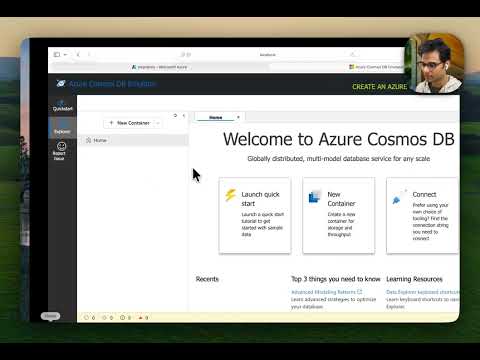
▶️ Here is a demo using GitHub Copilot CLI, but same would work with Agent Mode in Visual Studio Code, or any other MCP compatible tool (Claude Code, etc.):
🚀 How to Run
To start with, clone the GitHub repo and build the binary:
git clone https://github.com/abhirockzz/mcp_cosmosdb_go
cd mcp_cosmosdb_go
go build -o mcp_azure_cosmosdb_go main.go
Note: The MCP server uses the DefaultAzureCredential implementation from the Azure SDK for Go to authenticate with Azure Cosmos DB. This means that you can authenticate using various methods, including environment variables, managed identity, or Azure CLI login, among others.
> This ^ is not applicable to the local emulator since it uses a well known key-based authentication.
This MCP server supports both Streamable HTTP and Stdio transports. You can run the MCP server in two modes:
- Locally on your machine as an HTTP server, or stdio process
- Deployed to a remote endpoint (like Azure App Service, Azure Container Apps, etc.) as an HTTP(s) server
💻 Local mode
Thanks to Streamable HTTP support, you can easily run this MCP server as an HTTP server locally on your machine.
Login using Azure CLI (az login), or the Azure Developer CLI (azd auth login). Since the MCP server uses DefaultAzureCredential, it will authenticate as the identity logged in to the Azure CLI or the Azure Developer CLI.
The user principal (identity) you are logged in with should have permissions (control and data plane) to execute CRUD operations on database, container, and items.
🌐 HTTP server
Start the server:
export COSMOSDB_MCP_SERVER_MODE=http
./mcp_azure_cosmosdb_go
This will start the server on port 9090 by default. You can change the port by setting the PORT environment variable.
How you configure the MCP server will differ based on the MCP client/tool you use. For VS Code you can follow these instructions on how to configure this server using a mcp.json file.
Here is an example of the mcp.json configuration for the HTTP server:
{
  "servers": {
    "mcp_azure_cosmosdb_go_http": {
      "type": "http",
      "url": "http://localhost:9090"
    }
  }
  //other MCP servers...
}
> Change the port if you have configured a different one.
🖥️ Stdio server
Here is an example of the mcp.json configuration for the stdio mode:
{
  "servers": {
    "mcp_azure_cosmosdb_go_stdio": {
      "type": "stdio",
      "command": "./mcp_azure_cosmosdb_go"
    }
  }
  //other MCP servers...
}
Once you have configured the MCP server in your tool, you can start using it to interact with Azure Cosmos DB (just like in the demo shown above). For other tools like Claude Code, Claude Desktop, etc., refer to their respective documentation on how to configure an MCP HTTP/stdio server.
> Large Language Models (LLMs) are non-deterministic by nature and can make mistakes. Always validate the results and queries before making any decisions based on them.
For both the cases, if you want to use the vNext emulator, make sure its already running on your machine - docker run -p 8081:8081 -p 1234:1234 mcr.microsoft.com/cosmosdb/linux/azure-cosmos-emulator:vnext-preview
☁️ Remote endpoint
You can also deploy this MCP server to any cloud service (like Azure App Service, Azure Container Apps, etc.) and expose it as an HTTP(s) endpoint. The Azure service should support Managed Identity, and the MCP server will automatically pick up the credentials using the DefaultAzureCredential implementation.
⛔️ This execution mode is not recommended. Use this only for testing purposes. This is because, although MCP server can access Azure Cosmos DB securely using Managed Identity, it does not authenticate (or authorize) clients yet - anyone who can access the endpoint can execute operations on your Cosmos DB account.
🧪 Local dev and testing
Use MCP inspector - make mcp_inspector

Sign in to leave a review
Use Google, GitHub, or an email account so ratings stay tied to real people.
No reviews posted yet.