
Fastclaw
About
The README includes setup instructions such as cd deploy/docker && ./start.sh. Agents — Create and manage agents, each with its own personality and model Skills — Install shared skills from ClawHub or GitHub Models — Configure LLM providers (OpenAI, Anthropic, Ollama…
Explore
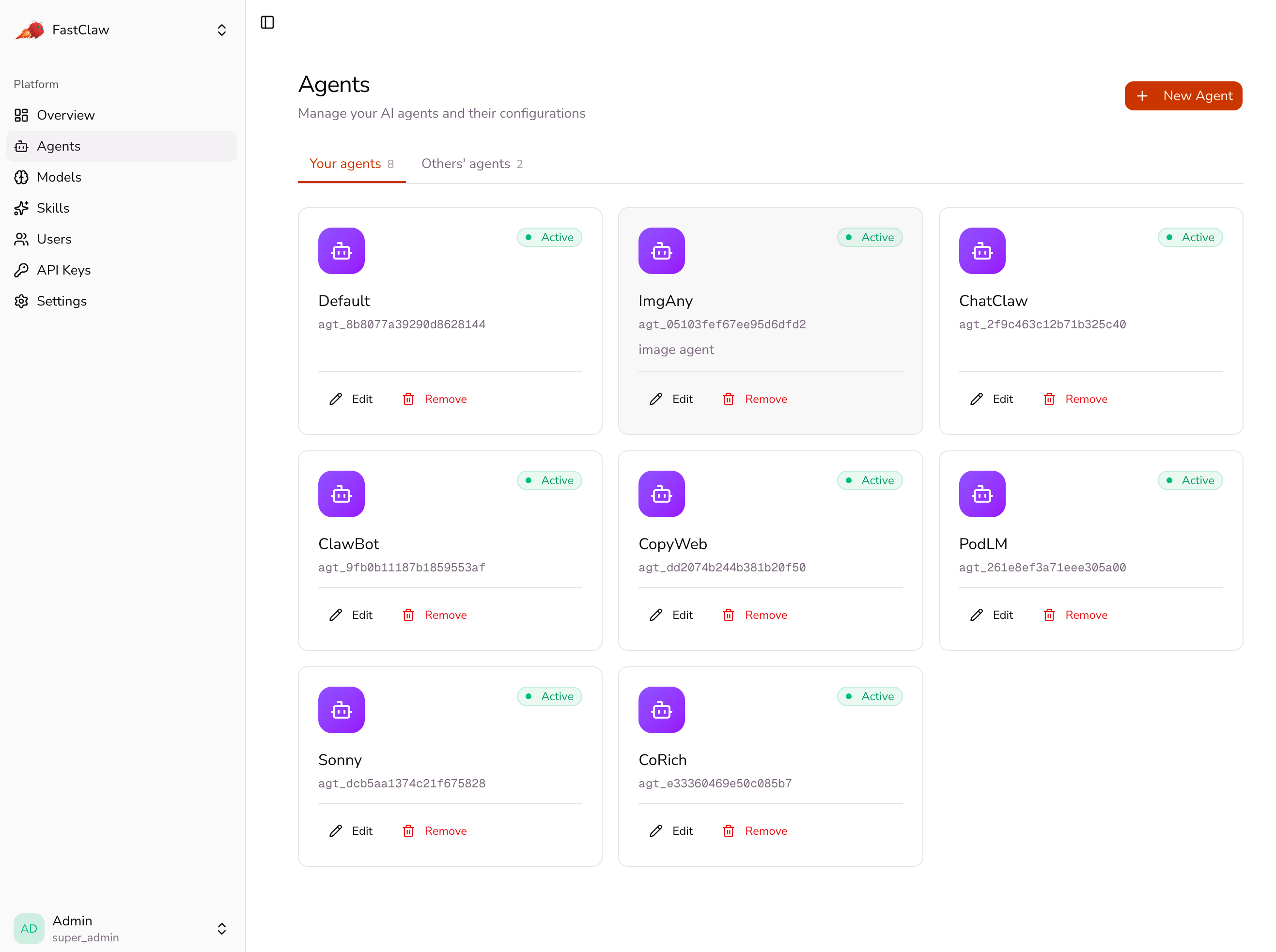
- Agents — Create and manage agents, each with its own personality and model
- Skills — Install shared skills from ClawHub or GitHub
- Models — Configure LLM providers (OpenAI, Anthropic, Ollama, OpenRouter, etc.)
- API Keys — Issue programmatic credentials (admin / user / agent tiers)
- Settings — General (theme), Account (profile + password), Runtime (sandbox config; admin only)
Bootstrap is env-only. Everything that needs to change at runtime
(providers, models, channels, defaults, sandbox toggle) lives in the
database and is edited through the dashboard or fastclaw agents config.
| Env var | Default | What it does |
|---|---|---|
| FASTCLAW_HOME | ~/.fastclaw | Where the SQLite DB and skill folders live. |
| FASTCLAW_PORT | 18953 | Gateway HTTP port. |
| FASTCLAW_BIND | loopback | loopback (127.0.0.1) or all (0.0.0.0). |
| FASTCLAW_STORAGE_TYPE | sqlite | sqlite or postgres. |
| FASTCLAW_STORAGE_DSN | empty | Postgres DSN, e.g. postgres://u:p@host:5432/db?sslmode=disable. Empty = sqlite at $FASTCLAW_HOME/fastclaw.db. |
| FASTCLAW_STORAGE_AUTO_MIGRATE | true | Apply schema migrations on boot. |
| FASTCLAW_REDIS_ENABLED | false | Enable Redis-backed channel leases and Redis Stream message bus. Setting FASTCLAW_REDIS_ADDR also enables it. |
| FASTCLAW_REDIS_ADDR | 127.0.0.1:6379 when enabled | Redis address used by multi-replica channel locks and shared inbound/outbound delivery streams. |
| FASTCLAW_REDIS_USERNAME | empty | Redis ACL username, if required. |
| FASTCLAW_REDIS_PASSWORD | empty | Redis password, if required. |
| FASTCLAW_REDIS_DB | 0 | Redis logical database number. |
| FASTCLAW_REDIS_PREFIX | fastclaw | Prefix for Redis stream and lease keys. |
| FASTCLAW_SANDBOX_ENABLED | dashboard | Override the Settings → Runtime toggle. |
| FASTCLAW_SANDBOX_BACKEND | dashboard | docker or e2b. |
| FASTCLAW_SANDBOX_IMAGE | dashboard | Docker image (Docker backend) or template id (E2B). |
| FASTCLAW_OBJECT_STORE_ | unset | S3-compatible blob store for distributed deploys (multi-pod skill / file hydration). |
| FASTCLAW_LOG_LEVEL | info | debug / info / warn / error. |
Anything not on this list — providers, models, default model, skill
catalog, channels, plugin config, scheduler — is configured at runtime
through the web UI (http://localhost:18953) or the CLI (fastclaw,
agents configfastclaw provider, fastclaw skill).
curl -fsSL https://raw.githubusercontent.com/fastclaw-ai/fastclaw/main/install.sh | bash
skills/ # Shared skills (bundled + installed)
agents/
<agentId>/agent/skills/ # Agent-private skills (filesystem only)
The database is the source of truth for everything except skill folders
on disk. SQLite is the default; point FASTCLAW_STORAGE_DSN at Postgres
for multi-pod deployments.
There is no fastclaw.json. Bootstrap settings (port, bind, storage
DSN, sandbox backend) come from FASTCLAW_ env vars; everything user-
facing (providers, channels, settings, defaults) lives in the configs
table and is edited through the dashboard or fastclaw agents config.
fastclaw agents init alpha \
--provider openai \
--model openai/gpt-4o-mini \
--api-key-env OPENAI_API_KEY
Per-agent (saved at scope=agent under the agent's id):
- model, temperature, maxTokens, thinking, policy
- sandbox, sandbox.enabled, sandbox.backend, sandbox.image, sandbox.network
System-wide (saved at scope=system):
- plugins, plugins.<name>
- skills.install, skills.entries, skillsLearner
- tools.providers, tools.categories
- objectstore, taskqueue, heartbeat, memory, privacy, hooks, teams
Provider configs live in scope=system and are addressed as
provider.<name>.<field>:
fastclaw agents config alpha set provider.openai.apiKeyEnv OPENAI_API_KEY
fastclaw agents config alpha set provider.openrouter.apiBase https://openrouter.ai/api/v1
fastclaw agents config alpha set provider.openai.model gpt-4o # adds; idempotent
fastclaw agents config alpha set provider.openai.models '[]' # explicit clear
Provider presets ship for openai, openrouter, anthropic, ollama,
groq, deepseek, mistral — --api-key-env populates apiKey from
the named environment variable, the rest comes from the preset.
- Built-in: exec, read_file, write_file, list_dir, web_fetch, web_search, memory_search
- E2B cloud sandbox or Docker sandbox — automatic skill + workspace hydrate, post-exec sync (sandbox-side files mirrored back to the durable store after every tool call)
- MCP server support
- Plugin system (JSON-RPC subprocess)
A lightweight AI Agent runtime written in Go.

Single binary - Any LLM - Multi-agent - Sandbox - Cloud-ready
Quick Start - Architecture - Features - License
</div>
---
<p align="center">
<br>
<em>Platform admin: agents, models, skills, users, API keys</em>
</p>
<p align="center">
<br>
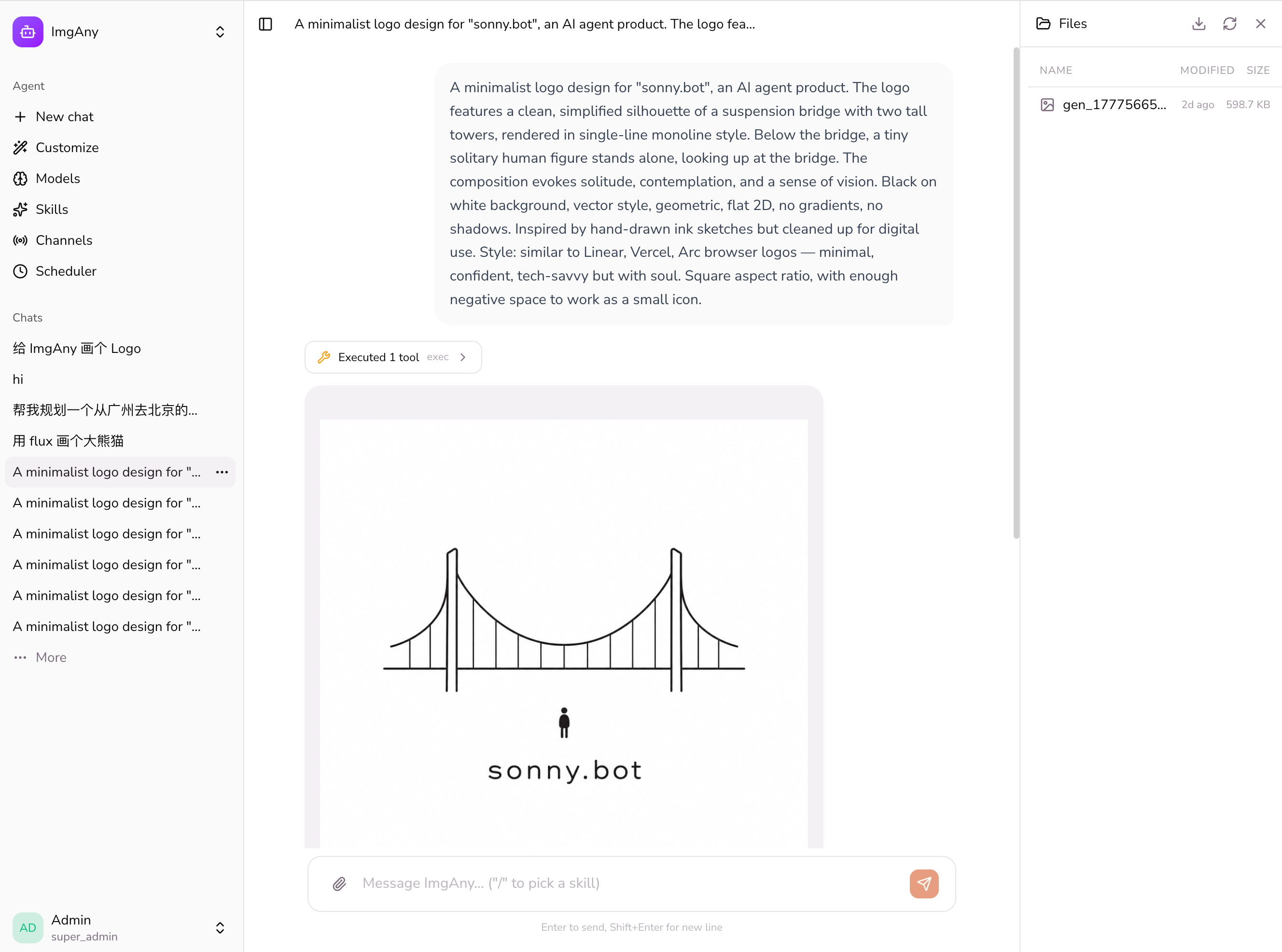
<em>Per-agent management: chat, customize, scoped models / skills / channels / scheduler</em>
</p>
What is FastClaw?
FastClaw is an Agent Factory — it creates, manages, and runs AI agents. Each agent has its own personality (SOUL.md), memory, skills, and tools. FastClaw handles the LLM communication, tool execution, sandbox isolation, and session management.
```bash
Sign in to leave a review
Use Google, GitHub, or an email account so ratings stay tied to real people.
No reviews posted yet.